• Skip to main content
  • Skip to primary sidebar
Looking to find the best discounts on Kratom? Sign up for our weekly newsletter to receive coupons and deals!
Left Coast Kratom Logo
  • Buy Kratom
    • Kratom Powder
    • Kratom Extract
    • Kratom Capsules
    • Accessories
  • Resources

kratom

Vaping Kratom: Why You Should Avoid This Dangerous Activity

August 26, 2021 by Jacob

It’s not uncommon to see people using vapes, also known as vaporizers, to enjoy smoking in a new way. These vapes can be used with various vape juices or concentrates, some of which contain substances like nicotine or CBD. People find vapes to be a faster, easier, and sometimes, safer, way to experience different things.

However, vaping Kratom is something that you should never do.

Why is vaping Kratom something that people are considering, and what is so dangerous about this activity?

Today, learn more about vaping, how vapes work, and why Kratom doesn’t work with that process. There are other alternatives to try instead; let’s talk about it.

Understanding Vaping

Vapes, also known as vaporizers or electronic cigarettes, are an electronic way of heating up substances to inhale their vapors. These handheld machines have changed since they were first introduced a number of years ago. Understanding how vapes work is important to understand why Kratom should not be vaped.

How Does Vaping Work?

Though there are different types of vapes, they all work in a similar fashion:

  1. The battery is turned on; this battery controls the heating element.
  2. E-juice is added to the atomizer, which is a small chamber in the vape.
  3. The coil, powered by the battery, heats up the juice rapidly so that it vaporizes.
  4. The vapor is inhaled through a mouthpiece by the user.

There are different types of champers, batteries, coils, mouthpieces, and juices that can be used in the vape’s construction. Some vapes work better than others, and some are safer than others to use. 

There are even vapes that allow you to control the temperature of the coil as well as the length of time it takes to heat up the juice. These more advanced features come at a price, but those who use vapes regularly often find them worth the investment.

The key thing to remember is that the heating element heats at a very high temperature to vaporize, rather than burn, the juice. The vapors are then inhaled, and this is what is then exhaled as smoke.

What Things Can Be Vaped?

Depending on the construction of the vape, there are different types of vape juice that can be used in a vape.

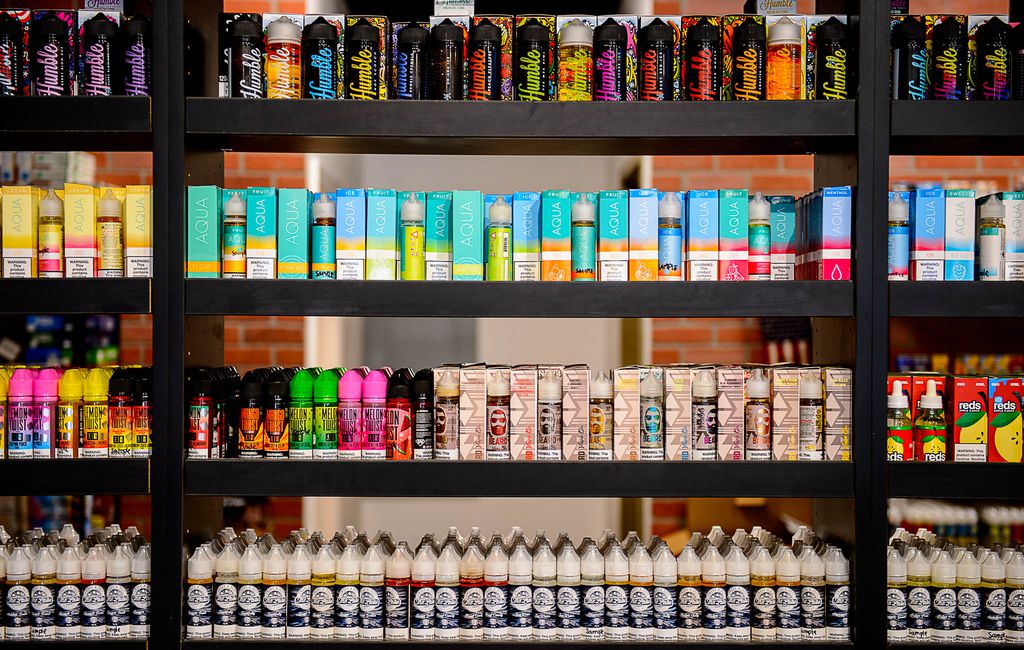
Vape juices are made mostly of either vegetable glycerin or propylene glycol as the suspension agent; this is what allows the other ingredients to be heated up into a vapor. Vape juice may contain water, food flavorings, nicotine, and other ingredients as well. The makeup of the juice depends on what you are planning to vape.

Beyond nicotine, there are also vape juices that contain CBD. While it is possible to vape cannabis concentrates and components, these need to be vaped with specialty vaporizers that can handle herb and other suspension materials like wax. Trying to use these in a liquid vape will not work out well, and it could be dangerous.
Kratom: Can It Be Vaped?

Now that you know more about vaping, let’s answer today’s pressing question: can Kratom be vaped?

As of now, no. Kratom cannot be safely vaped because there aren’t any vaporizers made specifically to vaporize it, and there also aren’t any vape juices that have Kratom’s active chemical components in them. Without having products specifically made to be vaped, vaping Kratom through homemade juices could be dangerous.

Why Hasn’t Anyone Made Kratom Vape Juice?

Kratom fans might wonder why no one has made any Kratom specific vape products yet. When it comes down to it, we, like most Kratom vendors are focused on creating safe and tested products that our customers already enjoy.

Making vape juice with Kratom would require finding a way to make sure that the alkaloids stay active even after they are heated up. Alkaloids often deactivate when heating, so this would be a very difficult part of making Kratom vape juice. There is currently no way to know if alkaloids would be effective through a vape.

Additionally, all of the tests that have been done about Kratom have been done on Kratom that is ingested. This means that any knowledge we have of how Kratom works is based on eating or consuming Kratom, not vaping it.

Kratom’s effects are most frequently studied when they enter the bloodstream through the digestive system, and vaping Kratom would not work the same way.

Tested and True Kratom

Since there is currently not a clear answer about whether or not vaping Kratom is safe, it’s best to stick to using it in ways that have been tried and true for the last decade (or more). 

If you want to see more studies being done about Kratom and different ways to enjoy it, now is a great time to get involved in Kratom advocacy. Advocates around the country are working together to ensure that Kratom can be safely and legally used in the US for the foreseeable future.

Groups like the American Kratom Association work to ensure that Kratom consumers are properly protected, and they also work to ensure that the latest research opportunities for Kratom are being taken.

Shop Safe At Left Coast Kratom

While finding ways to enjoy Kratom safely, make sure that you are always getting your Kratom from a reliable vendor like us here at Left Coast Kratom. We take care to properly test our products while also regularly updating our catalog. From capsules to concentrates, we have a variety of Kratom products for sale today.
Filed Under: Resources Tagged With: consumer education, consumer protection, consumer safety, kratom

Get To Know Yellow Vein Kratom (And How It’s Unique)

June 30, 2021 by Jacob

What do you know about the different color types of Kratom strains? Did you know that beyond the more common red, white, and green strains there is also yellow vein Kratom? Unlike the others, however, the color name does not always reflect the appearance of the leaves.

Learning about Kratom colors and where each strain type originates from is a great way to be more knowledgeable as you shop around. Many Kratom users like to mix up the strains that they use from week to week but don’t know enough about different types to do so easily.

By learning more about yellow vein Kratom today, you will be ready to make more informed choices going forward. Let’s get into it!

The Origins Different Kratom Colors

Kratom users may be familiar with where Kratom itself comes from: deciduous trees that grow in some areas of Southeast Asia. The tree prefers warm climates where there is a lot of rainfall, and it can grow to incredible heights of 70 feet or more.

Though those trees are where Kratom leaves, powders, and products come from, that simple description doesn’t tell people where the base colors of Kratom come from. Most people that have experienced Kratom know about red, white, and green Kratom. Where do the colored strains come from?

The colors of kratom strains are largely determined by when the leaves are harvested and how they are dried. Leaves that see more sunlight as they dry get darker, while less mature leaves that dry in the dark remain lighter. The actual color of the leaves’ veins does contribute slightly to the final product, but much of the color is determined through drying.

The Kratom Harvesting Process

To understand why drying is such a big part of the process, we need to talk about the overall harvesting process.

Kratom leaves are picked at different times throughout their lifespan, and leaves grown in different areas have different amounts of alkaloids. Once picked, the leaves are then dried. Leaves can be dried in the sun or they can be dried in the shade. Some leaves are dried in combination areas.

The way that leaves are dried leads to different alkaloid content as the plant matter changes in the drying process. Already varied leaves begin to vary even more once they are dried in different ways, and this contributes to the large number of Kratom strain types on the market today.

Yellow Vein Kratom: It’s Unique Story

Yellow Kratom has a unique story in that many people disagree about where the color comes from. Why is some Kratom powder yellow if the leaves on the trees are not yellow and do not have yellow veins?

A few ideas have circulated over the years about where the color of yellow Kratom comes from:

  • The leaves get yellow once they grow for longer, leading to yellow Kratom.
  • A blend of multiple colored Kratom powders is fermented to make it yellow.
  • The leaves are dried in a specific way to make the color yellow.

Which of these ideas do you think is the most accurate?

Banner For Shopping

Generally speaking, most yellow vein Kratom is processed with the third idea in mind. Specific types of leaves are dried in specific ways to lead to the color yellow. Much like white, green, and red Kratom, the drying process is a big part of the final color.

However, different yellow Kratom strains may have a different story. The best way to find out how a specific yellow strain came to be is to check with the vendor about its creation. It might be a proprietary blend, but they will still have some information about its derivation.

There are some blends that come out to be yellow that are made from a mixture of other Kratom strains, and there are a few strains that have been dried in a way that is closer to fermentation. Yellow Kratom is very unique in that way. Every strain has a unique story of how it came to be!

Reported Yellow Vein Kratom Properties

Those that haven’t tried yellow Kratom strains before might want to know more about what to expect. Is it similar to a red vein Kratom, or is it more like a white vein Kratom?

Most yellow Kratom is a blend that leads to moderate properties, often similar to a green strain. The alkaloid content is different depending on the exact drying process, however, so it is not possible to say for sure what a yellow Kratom strain will be like for users.

Experienced Kratom users have reported that yellow Kratom is typically a soothing variety that is less stimulating than other color strains. Still, it’s important to remember that every strain is different. Always make sure to start with a limited amount to ensure that you are prepared for any potential effects until you get to know a new strain.

Our Top Yellow Vein Kratom Products

If you’re interested in checking out the top yellow vein Kratom products from Left Coast Kratom, look no further! We’ve gathered together a quick list of our favorite yellow Kratom items so that you can easily browse them today.

Our top offerings of Yellow Vein Kratom include:

  • • Maeng Da Thai Yellow Vein Kratom Capsules
  • • Maeng Da Thai Yellow Vein Kratom Powder
  • • Thai Yellow Vein Kratom Powder

Each of these products is carefully selected, processed, tested, and packaged for your convenience. We are proud to offer a variety of high-quality Kratom products; these are just a few of the wonderful items that you can find in stock on our website today.

Use Your Discerning Eye

When you’re shopping around for a new type of Kratom that you haven’t experienced before, you might be too quick to make a purchase. You always want to be sure that you are shopping with reliable vendors when buying kratom.

Everything from the labeling to the testing of Kratom must be handled properly for your Kratom supply to be safe. Shopping from reliable vendors is a great way to ensure that you can take Kratom as safely as possible.

Click here to browse our selection of Yellow Vein Kratom products today!

Filed Under: Resources Tagged With: featured, kratom, kratom strains, leaf, mitragyna speciosa, yellow vein kratom

What is Kratom Resin & How Is It Made?

May 4, 2021 by Jacob

If you thought Kratom was good, wait till you try Kratom resin. 

This special resin product is quickly growing in popularity. If you’re been wondering about: 

  • How to make it 
  • How to take it

…then this is probably the article for you. 

Keep reading to learn more about what Kratom resin is, what it does, and how you can make it yourself! 

Kratom 101

Kratom is a specific species of tropical evergreen tree (Mitragyna speciosa) that grows in Southeast Asia. 

While all Kratom products are produced from this single species, the range of earthy colors available for sale has everything to do with how the leaves are harvested and dried. Kratom is traditionally categorized based on the color of its leaves. 

Kratom resin is a more concentrated form of Kratom that isn’t for everybody. It requires both knowledge and effort to produce, and it’s far harder to find the right serving size than conventional Kratom products. For these reasons we recommend that new consumers stick with traditional Kratom powder. 

That disclaimer aside…let’s take a close look at the perfect product for Kratom connoisseurs: Kratom resin.

What is Kratom Resin?

Kratom resin is a type of Kratom extract. While there are several types of extracts, Kratom resin stands out. It’s thick, sticky, and dense. 

What is Kratom resin made of? It’s basically a processed, concentrated form of Kratom’s best alkaloids and other bioactive compounds. Since these compounds are what give Kratom its characteristic effects, Kratom resin is powerful. 

How to tell how concentrated your Kratom Resin is

The strength of Kratom resin is generally pretty difficult to quantify. Why? Because Kratom resin is usually made at home — and not many people have an analytical lab laying around nearby!

Instead of being measured in absolute amounts, Kratom resin is usually measured in multiples compared to its original form. You might see labels that say things like ‘8 x Kratom Resin’ (8 times more concentrated than the original) or ‘20 x Resin’ (20 times more concentrated than the original). And by “more concentrated” we mean more alkaloids. 

Here’s a real-life example. If a pound of Kratom powder goes into the making of 2 ounces of concentrated Kratom resin, the final product would be an ‘8 x Kratom Resin.’

How to use Kratom Resin

One of Kratom resin’s strongest points is its versatility. It can be taken in a variety of ways: orally, in juice, in capsules, or mixed with a favorite hot beverage. 

The heat of beverages like coffee or tea allows the Kratom resin to melt and fully dissolve. And because resin’s alkaloids have already been ‘activated’ by heat, you don’t need to take any time to heat or prepare resin-infused beverages! That’s another benefit of resin — it makes preparing Kratom simple and easy.  

How to make Kratom Resin (at home!)

Making Kratom resin at home might sound like a daunting task, but it’s actually quite easy. 

Once you’ve gone through the production process once or twice you’ll probably feel comfortable enough to set things on autopilot. 

Kratom resin ingredients list:

  • ➡ Premium Kratom Powder
  • ➡ Accurate kitchen scale
  • ➡ Lemon juice or lime juice
  • ➡ Water
  • ➡ Mixing bowl
  • ➡ Coffee filters/cheesecloth
  • ➡ Freezer, stove-top, and oven
  • ➡ Access to freezer, stovetop, and oven
  • ➡ Extra container (for the finished product)

How to make Kratom Resin (step-by-step)

Part I: Steep and Freeze

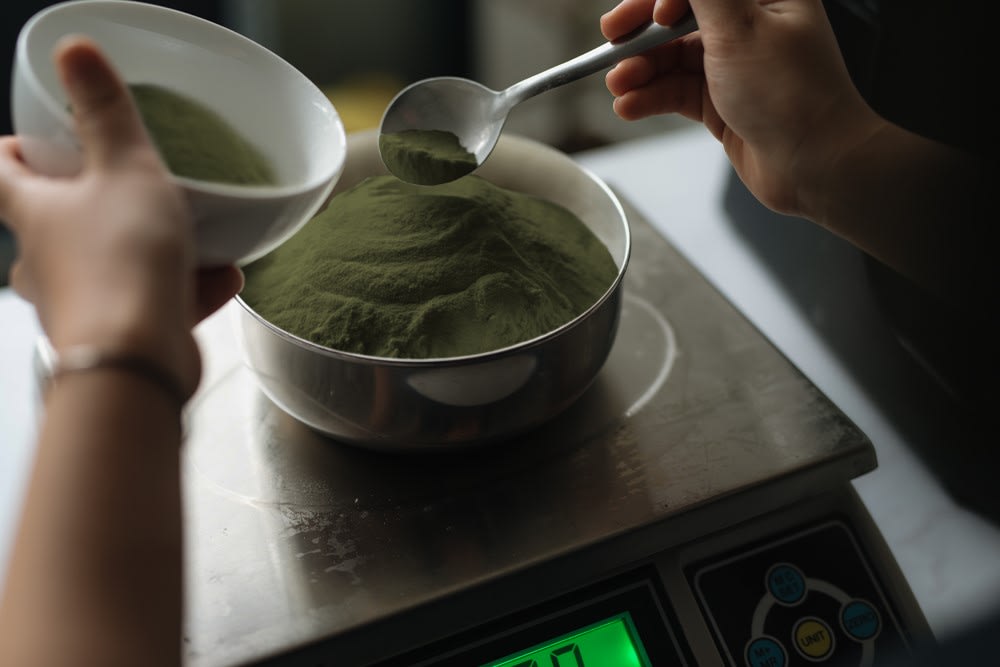
  1. 1.) Measure out a large quantity of Kratom powder on your kitchen scale.
  2. 2.) Note its weight — you’ll need this figure later. 
  3. 3.) Add the powder to your mixing bowl.
  4. 4.) Add water until the Kratom powder is completely covered.
  5. 5.) Mix the Kratom powder and water.
  6. 6.) Add your lemon/lime juice.
  7. 7.) Cover the mixture and let it steep.
  8. 8.) Leave the mixing bowl in the freezer overnight, allowing it to freeze.

Part 2: Boil and Simmer

  1. 1.) Bring water to a boil, then dump the frozen mixture into the boiling water.
  2. 2.) Add additional lemon or lime juice to the water.
  3. 3.) Reduce the heat and allow the mixture to simmer.
  4. 4.) Once about 1/4 of the liquid has evaporated, remove the mixture from heat.
  5. 5.) Once cool, strain the mixture and place it back in your mixing bowl. At this point, you should have a wettish powder suspended in some liquid.

Part 3: Bake at Low Temp

  1. 1.) Set your oven at 175 degrees Fahrenheit and wait until it’s preheated.
  2. 2.) Place the saucepan mixture into a small oven-friendly dish and put in the oven.
  3. 3.) After about 30 minutes, you should be left with a concentrated Kratom resin. Remove from the oven and let cool.
  4. 4.) Transfer your Kratom resin into a new container and measure its weight.
  5. 5.) Compare the weight of your original Kratom powder with the weight of your final product to get an idea of the concentration.
  6. 6.) Enjoy your premium quality, homemade Kratom resin!

If making your own Kratom resin sounds like too much work, check out our Kratom extract products. We have a variety of different extracts to choose from, all with their own unique composition and alkaloid profile.

Click here to shop Kratom extract products today!

Filed Under: Resources Tagged With: alkaloids, concentrates, DIY, featured, kratom, kratom extract, kratom resin

How Does Kratom Benefit Local Economies Around The World?

September 29, 2020 by LCK

Every single customer that buys a kratom product is not only supporting the business that they are buying from, but they are also supporting a variety of other businesses as well.

When you buy from a local shop, that shop has sourced the kratom from a larger manufacturer. The manufacturer has sourced the kratom from overseas suppliers and possibly even from farmers directly. The supply chain goes much farther than many people realize!

Kratom as an industry supports small businesses on many levels. From local to national to international, let’s take a look at how the industry supports these businesses.

Kratom: From Sourcing To Customers

What does the kratom supply chain look like?

The chain will vary for different companies and policies, but the general outline usually goes likes this:

  1. Local Farmers
    Local farmers grow or harvest kratom. Some may do this on their own properties; others will work at larger farms where kratom is being grown.
  2. Distributors
    Local or international distributors will broker deals with these farmers to send their unprocessed kratom exports to kratom vendors or manufacturers.
  3. Kratom Vendors
    Once they have the kratom, vendors will process, test, and blend their kratom products.
  4. Local Shops
    While most vendors sell directly to customers, they also sell directly to smaller smoke shops that carry kratom. These shops then sell directly to customers as well.

Most kratom vendors have specific arrangements with farmers and distributors so that they have a secure, steady supply of reliable imports. Once they receive the product, however, they must still test it to ensure the quality.

Supporting Local Businesses With Kratom

The local economy has benefited from the expansion of the kratom industry in the US. We can expect those benefits to continue as kratom becomes even more commonplace. How is kratom having an effect on businesses and economies in America?

National Companies

Many kratom vendors operate primarily online, but that does not mean that they do not employ people and positively affect the economy.

Vendors that important unprocessed kratom must set up:

  • Facility for kratom processing, packaging, and shipping
  • Sales team
  • Marketing team
  • Supply chain management team

Each of these sectors requires that the company hire people. Most kratom vendors ship to all states where kratom is legal in the US, so they are also helping to continue the movement of money between small businesses in America.

Local Stores

Local smoke shops and other companies that carry herbal products may decide to stock kratom on their shelves. Typically, they’ll stock those products directly from national kratom vendors. Purchased in bulk at a discount, these local vendors then sell at MSRP for a profit. In this way, you can also support local business by buying from your local shop.

Supporting The Right Laws

Even if you don’t purchase kratom or you only want to buy from one shop that you rely on, it is possible to support the business that works at all parts of the supply chain in one go.

How do you do this?

Kratom’s legal status has been constantly evolving over the last few years, and the lack of regulation in the industry is causing unreliable vendors to create more problems. By supporting kratom consumer protection laws in your area, you can help to ensure that businesses who profit from kratom will continue to see those benefits.

Choose The Right Vendors

Some vendors are more interested in the overall well-being of the kratom industry than others. When a vendor chooses to put profits before safety, they are jeopardizing the entire industry. Kratom advocates are still fighting for legal protections in the US, and low-quality kratom sales put that legal status at risk.

Do your research before you purchase kratom. Look for vendors that have not only a positive effect on the economy, but also vendors that adhere to good manufacturing practices. The American Kratom Association has a program that vendors can join for this type of guidance known as the GMP Compliance Program, and we are happy to be members. 

Supporting Kratom Production Abroad

As mentioned in the supply chain above, kratom production is not just limited to America. Kratom is a tropical tree native to certain parts of the world, so the actual kratom will always need to be imported from Southeast Asian farms.

When purchasing kratom, you support the farmers that grew and harvested the kratom and the international distributors that connected those farmers to vendors in the US.

Choosing High-quality Production Companies

Choosing kratom vendors in the US that care about the kratom farmers that they buy from is essential. There are no official fair trade practices in the kratom industry yet, but the idea should still prevail. Fair trade prevents farmers from being undervalued or ripped off for an exported product. 

Helps Local Workers

Many Kratom farmers joined the industry as other industries were dying out there. Farmers were unsure what to turn to as some industries were no longer viable. In the kratom industry, they found a great, new living. As a profitable export industry, their farms and lifestyles are revolutionized.

Environmental Effects

Kratom farming is also less dangerous for the environment than palm oil, a common type of plantation seen in Indonesia. By farming kratom instead of palm oil, the farmers are making good money and also keeping their land healthier.

Left Coast Kratom: People First

From our customers to the farmers that we buy kratom from, Left Coast Kratom is devoted to acknowledging the work that creates high-quality kratom. Through your support, we can compensate everyone that works on our products fairly. 

Additionally, the local shops that stock our products are able to continue the supply chain into the local business arena, and we know that this can have a positive effect in many communities. From start to finish, the kratom industry provides opportunities and support to people that might otherwise be left behind, and we are proud to be a part of that.

Click Here To Browse Our Catalog Of Superior Quality, Ethically Sourced Kratom!

Filed Under: Resources Tagged With: cGMP, distributors, economics, economy, fair trade, farmers, featured, kratom, retailers, supply chain, sustainable, vendors

What We Say: How and Why Kratom Advertising Is Restricted

September 15, 2020 by LCK

Kratom is classified as a food in many parts of the United States. This classification puts limitations on what we as kratom vendors can and cannot say about our products. The FDA limits what is permitted, and we must follow those guidelines if we want to be able to continue to market and sell our products legally.

How exactly do these restrictions come into play, and why aren’t we fighting against them?

Let’s talk about kratom, kratom labeling, and how advocacy organizations are working to improve the misinformation surrounding kratom.

What Can And Cannot Be Said

Ultimately, the FDA has made it clear that they are willing and able to send cease-and-desist letters to any kratom vendor that is publishing what they deem to be unsubstantiated claims.

Even in the articles that we publish, we have to be careful about our language and how we talk about kratom.

In the past, companies selling kratom have made huge claims about what kratom can do, and the FDA pushed back against these. But it wasn’t only bold claims that the FDA warned about; simple, seemingly common knowledge statements have also attracted their attention. 

Risky Statements

What type of statements do we have to be careful about when using on our site? There are many, and it is also difficult for us to follow these limitations. We want to be as open, clear, and helpful as possible for our customers, but FDA rules make this difficult at times.

These are just a few examples of statements that have got kratom vendors into trouble with the FDA in the past:

  • Claiming that people use kratom as an alternative to some medications.
  • Claiming that people prefer kratom over their other medication options.
  • Claiming that people use kratom to help them stop using other things.
  • Claiming that kratom has specific benefits.

We know that these examples are vague, and that is intentional as not to catch ourselves in this trap. As you can see from the breadth of those examples, however, it becomes difficult for honest vendors like ourselves to share any information or evidence with our customers without risking trouble.

What Are Unsubstantiated Claims?

Let’s talk a little more specifically about what the FDA considers “unsubstantiated claims,” which is the most common reason they send out warning letters. We’ve given a few vague examples above, but let’s look at direct news from the FDA to see how they frame their approach.

Specifically, a press report from the FDA states the following:

  • Vendors are selling kratom “with deceptive medical claims for which there’s no reliable scientific proof to support their use.”
  • Vendors “ take advantage of consumers by selling products with unsubstantiated claims that they can treat opioid addiction.”

If the FDA is truly against products that are not backed by science and willing to support kratom research, that would be an understandable position. However, the statement goes on to say that Kratom is an “opioid analog that may actually contribute to the opioid epidemic,” which may be an unsubstantiated claim by the FDA’s own rules.

Additionally, the FDA report states that the FDA is willing to look into how kratom may or may not relieve pain or opioid addiction symptoms if people believe that kratom’s active ingredients show that potential. However, the AKA states that FDA has refused to support that type of research for years.

Simultaneously, the National Institute on Drug Abuse has refused to support scheduling kratom as a drug because NIDA’s own research has not borne out that claim according to NIDA’s standards.

As you can see, it is a very confusing field for kratom vendors like ourselves to navigate. Our goal is always to provide safe, high-quality products to our customers. We want to support those products with information, but it isn’t always an easy thing to do.

The Standards We Follow

How do we handle the labeling and advertising of our products when faced with limitations and concerns about what we can and cannot say?

As members of the American Kratom Association’s GMP Compliance Program, we ensure that our labeling fits these things’ standards. AKA is up-to-date with the FDA’s latest requirements, and they are also at the forefront of helping to implement Kratom Consumer Protection Acts in states across the country.

In short, they know what they’re talking about when it comes to labeling, advertising, and more.

As of June 2020, the compliance program has laid out the following guidelines for vendors and marketing:

  • Labels may not include:
    • Any disease-related or unauthorized health claims
    • Any reference to a “high”
    • Any reference to clinical or research data
  • Labels must:
    • Be fully compliant with FDA claim rules
    • Include a batch or lot number
    • Affirm that mitragynine and 7-OH alkaloids haven’t been altered from their original allocation
    • Advise consumers to talk to a physician about dosing
    • Include a statement that pregnant women should not use kratom
    • Include this exact statement:  “This product is not intended to diagnose, treat, cure, or prevent any disease or condition.”

These same rules apply to the descriptions, websites, and advertisements used when marketing kratom products.

New: The Truth in Labeling Program

Recently, the American Kratom Association has started a reporting program known as the Truth in Labeling Program.

Due to the rise in vendors directly going against the guidelines expected by the FDA, the American Kratom Association and other advocates have seen a need for a program to keep track of and improve improper labeling practices.

Through this program, the AKA hopes to educate vendors that are putting the industry at risk through dishonest practices. If the vendors refuse to change their ways, the industry will start to self-regulate by reporting offenders to the FDA. To read more about how or why the Truth in Labeling Program is meant to work, you can check out AKA’s statement.

Filed Under: Resources Tagged With: accuracy, advocacy, cGMP, compliance, featured, GMP, kratom, lableling, marketing, mitragyna speciosa, regulation, regulations

Understanding Kratom: Kratom Alkaloids Explained

September 1, 2020 by LCK

Natural substances like kratom have an effect on the body because of their chemical composition. Kratom itself is made up of many chemical components. When those components are released in the body, they bind and interact with human physiology in different ways.

While only a few kratom alkaloids are well known even among veteran consumers, kratom is actually made up of more than 40 alkaloids – and counting! What are these kratom alkaloids, and what types of effects are they being studied for?

Learning more about these alkaloids can help you better understand the myriad of ways kratom may be further developed and used. Let’s take a closer look!

What Are Kratom Alkaloids?

Alkaloids are a type of naturally-occurring compounds found in many plants. These compounds contain at least one nitrogen atom. These compounds bind readily with receptors in the human body; they cause physiological effects because of this binding. Common alkaloids include caffeine and morphine. The impacts of alkaloids vary widely.

Kratom is a natural plant, and kratom leaves have a variety of alkaloids in them. In fact, more than forty different alkaloids have been found in kratom. Many of these alkaloids have specific physiological effects on the body. Those alkaloids are being studied in more detail to find out what types of benefits might be found.

The specific alkaloid concentration in kratom leaves can vary from tree to tree, strain to strain.  For that reason, additional research of the individual components is even more critical. Once the individual alkaloids are better understood, the potential effects of various alkaloid combinations can be studied in more detail as well.

Kratom Alkaloids Explained

Now that you know what alkaloids are, let’s cover kratom’s alkaloids and alkaloid composition of this plant in more detail.

What We Know

The alkaloid content of kratom leaves varies from plant to plant, tree to tree, and location to location. There is no guarantee of the exact breakdown of alkaloids in any kratom leaf because many things affect the alkaloid composition:

  • Harvesting time and frequency
  • Weather patterns
  • Soil composition
  • When leaves are harvested
  • Dry season length
  • Strain
  • Geographic location
  • Age of leaves

As teams studied kratom leaves in the 1970s and 1980s, they found that the alkaloid concentration varied in many ways. They began to compare samples and found that the above factors, as well as many others, changed what alkaloids were most prevalent in the leaves.

Despite the fact that more than 40 alkaloids have been identified in kratom leaves, only two of those alkaloids (mitragynine and 7-hydroxymitragynine) are given credit for the effects of kratom. That’s because they occur in the greatest concentrations. Mitragynine usually makes up around 60% of the alkaloid content of kratom leaves on average.

As kratom is studied in more detail in upcoming years, we can expect to find out more about the variances in alkaloids in terms of effects and growth patterns for the kratom plants.

Meet The Alkaloids

Though more research still needs to be done about these substances, there are some alkaloids that have been studied after being found in kratom.

Mitragynine

The most prevalent alkaloid in most kratom leaves, mitragynine, is partially responsible for many of kratom’s active effects. It has been studied for many common uses, which can be fairly easily researched. As the primary kratom alkaloid, it is one of the two alkaloids that has its content percentage detailed on kratom packaging. 

7-hydroxymitragynine

The other kratom alkaloid that is typically acknowledged by kratom vendors is 7-hydroxymitragynine. While the amount of this alkaloid is substantially smaller than that of mitragynine, it is also a significant player in kratom’s active effects. It has been studied for its unique effects and receptor binding in particular.

The Phyllines

The naming of alkaloids is typically based on the original plant family that those alkaloids come from. A number of alkaloids found in kratom are named with the -phylline base. Mitraphylline, isomitraphylline, speciophylline, rhynchophylline, isorhynchophylline, and ciliaphylline are all found in kratom.

These alkaloids are likely to be studied for their potential beneficial actions, and we hope to learn more soon about how they interact with functions of the human body.

Paynantheine and Speciogynine

After mitragynine, paynantheine and speciogynine make up for the largest percentage of alkaloids in kratom leaves. These two alkaloids have been compared to similar alkaloids with and it may be assumed that their qualities are similar. It is possible that these alkaloids contribute to some benefits of kratom, but more research is needed.

Corynoxine A and B

Found in other natural plant products as well, these alkaloids interact with important receptors in the human body. This means that they may affect the binding of body chemicals in some way. These alkaloids, like many others, are found in concentrations of far less than 1% in most leaves.

Why Is It Important To Know About These Alkaloids?

Simply put: we need to put more resources into studying them!

Kratom research has been progressing at a very slow pace for the last few years. Among other reasons, that is because of the complicated laws surrounding the possession, use, and classification of kratom. Funding kratom research is difficult whenever there are no laws clearly protecting its status.

As laws become clearer and kratom earns a more protected status in the US, we can expect to see more research about kratom and how it can affect the body. In particular, a lot of that research is likely to focus on the individual alkaloids found in kratom and their effects.

Scientists, in particular, are very interested in kratom’s potential effects. However, more research needs to be done on kratom’s alkaloids.

The Future Of Kratom

Kratom as a whole plant and food product will continue to be studied, but we can also expect to see more and more branch-off studies of individual components. Often, it is easier to understand the effects of the broad plant if we studied individual chemical components first.

Mitragynine and 7-hydroxymitragynine are being studied more than other alkaloids at this time, but that is going to change as kratom becomes more heavily researched. We’re excited to find out what is discovered about every facet of kratom!

Filed Under: Resources Tagged With: 7-hydroxymitragynine, alkaloids, Corynoxine, featured, kratom, mitragyna speciosa, mitragynine, Paynantheine, phyllines, Speciogynine

  • « Go to Previous Page
  • Go to page 1
  • Go to page 2
  • Go to page 3
  • Go to page 4
  • Interim pages omitted …
  • Go to page 11
  • Go to Next Page »

Primary Sidebar

Left Coast Kratom Logo

Left Coast Kratom is here to help you experience the freshest highest quality kratom powders and extracts at competitive prices. We value customer service and will go above and beyond to deliver amazing products fast and at a quality you expect.

If you have any concerns or questions then please get in touch by emailing support@left-coast-kratom.com.

Customer Service

  • Affiliates!
  • Customer Rewards
  • Privacy Policy
  • Terms of Service
  • Contact Us
  • Shipping & Delivery
  • Orders & Returns

Information

  • Frequently Asked Questions
  • Reward Points
  • Site Map
  • Partner Sites

© 2023 Left Coast Kratom - Kratom Resources. All Rights Reserved.

Privacy Policy   Terms of Service